
The way Earth’s ‘thermostat’ works may have changed during Pangea era, UChicago scientists suggest
Supercontinent could have affected how Earth maintained stable temperatures

Study led by UChicago scientists finds atmosphere on the coldest lava world to date
Studying the atmospheres of lava worlds offers window to Earth’s earliest history, pathway to habitable worlds

Powerful seismic waves from Japan’s 2011 earthquake struck Earth’s core and bounced back up, moving island eastward
Event is first documented to involve four major tectonic plates, finds UChicago scientist Sunyoung Park

Scientists get best-ever look at distant planet’s surface with Webb Telescope
Data analyzed by UChicago scientists reveals exoplanet Kua’kua is dark and rocky, offering clues to search for habitable worlds

UChicago team wins funding to develop AI weather forecasts for underserved areas
Laude Moonshot program awards Data Science Institute and partners seed funding for forecasts to help communities in developing economies

UChicago paleontologists investigate how life entered and adapted to the deep sea
Clams, mussels show different patterns of evolution as they delved deeper

U.S. weather and climate disasters could top $1 trillion by 2030
Analyzing NOAA's billion-dollar weather disaster database, a UChicago study projects sharply rising costs driven by climate change and expanding development

Scientists pair AI and human knowledge to tackle notoriously difficult physics question
New approach may help shed light on turbulence, other stubborn natural mysteries

What decades of data reveal about climate disaster deaths
UChicago-led study analyses 2,000 deadly events worldwide since 1988
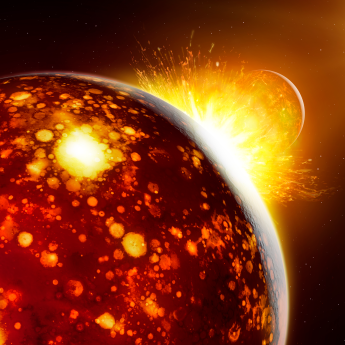
Moon may have formed through Earth’s collision with close neighbor, study finds
Meteorites, lunar samples help scientists unravel the 4.5-billion-year-old mystery of ‘Theia’