

Dark matter, explained
In all likelihood, we are standing in a sea of dark matter and don’t know it, because it virtually never interacts with our atoms. Learn how scientists at UChicago are searching to understand this mysterious substance.

‘Missing links’ of evolution, explained
When we look at the world around us, we see a wondrous variety of living things. How do species evolve into all these different forms? UChicago scientists explain.

False Memories, explained
Does the Monopoly Man have a monocle? The answer may be a false memory. At UChicago, scientists are studying this phenomenon, known as the Mandela effect, and how false memories form.
Exoplanets, explained
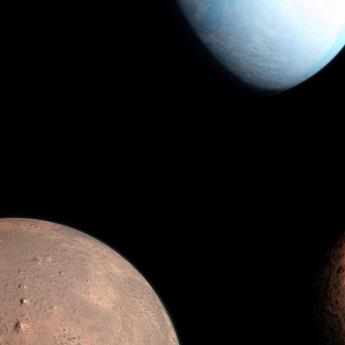
We now know there are thousands of planets out there in our galaxy alone. Learn what we know about them, and what mysteries remain.

Dark energy, explained
Coined by University of Chicago astrophysicist Michael Turner in 1998, dark energy—the force causing the universe to expand faster over time—remains one of the great mysteries of physics.

Improv, explained
Modern improv comedy began at the University of Chicago in the 1950s.

Cosmic rays, explained
Trillions upon trillions of cosmic rays hit the Earth every day. What are they?

The first nuclear reactor, explained
The world’s first reactor was built underneath the stands of a University of Chicago stadium as part of the Manhattan Project—kicking off the Atomic Age.

Carbon-14 dating, explained
First developed in the late 1940s at UChicago, carbon dating can determine the age of organic materials as old as 60,000 years.