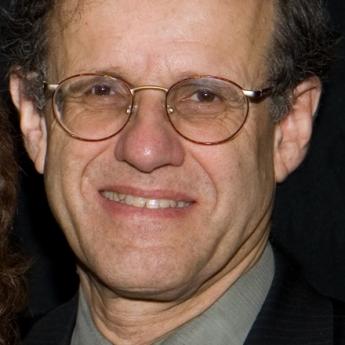
Robert Rosner
https://astrophysics.uchicago.edu/people/profile/robert-rosner/
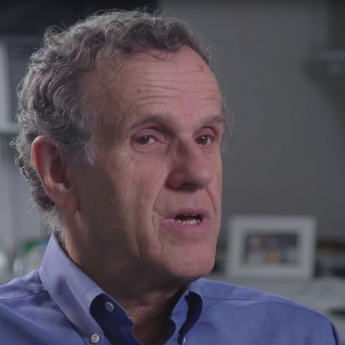
Robert Rosner is a theoretical physicist whose scientific work has been related to fluid dynamics and plasma physics problems, as well as in applied mathematics and computational physics, especially in the development of modern high-performance computer simulation tools.
Within the past few years, he has been increasingly involved in energy technologies, and in the public policy issues that relate to the development and deployment of various energy production and consumption technologies, including especially nuclear energy, the electrification of transport, and energy use in urban environments.
He was the founding director of the Energy Policy Institute at Chicago. He previously served as Argonne National Laboratory’s Chief Scientist and Associate Laboratory Director for Physical, Biological and Computational Sciences (2002-05), and was Argonne’s Laboratory Director from 2005-09; he was the founding chair of the U.S. Department of Energy’s National Laboratory Directors’ Council (2007-09).
Media Contacts
Mike Herbst
Media Relations Manager