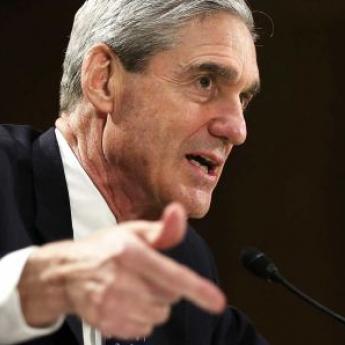
William Baude
https://www.law.uchicago.edu/faculty/baude
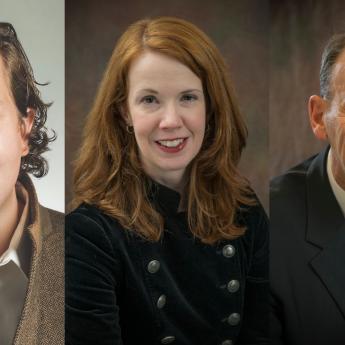
William Baude is the Harry Kalven, Jr. Professor of Law and the Faculty Director of the Constitutional Law Institute at the University of Chicago Law School, where he teaches a range of subjects such as federal courts, constitutional law, election law, conflict of laws, and elements of the law. His current research interests include judicial remedies available against the federal government, the Supreme Court's emergency docket, and the legacy of William Winslow Crosskey.
Among his other activities Baude is: the co-editor of two textbooks, The Constitution of the United States and Hart & Wechsler's Federal Courts in the Federal System and a podcaster and blogger at Divided Argument. In 2025 he won both the University of Chicago's Academic Communicators Network Excellence Award for digital media, and the Diversity Leadership Faculty Award (with Clinical Professor of Law Judith Miller).
Professor Baude received his BS in Mathematics from the University of Chicago and his JD from Yale Law School. He then clerked for then-Judge Michael McConnell on the United States Court of Appeals, and Chief Justice John Roberts on the United States Supreme Court. Before joining the Chicago faculty, he was a fellow at the Stanford Constitutional Law Center, and a lawyer in Washington, DC.
Media Contact
Elisa Xu
Media Relations Analyst
- elisax@uchicago.edu
- (773) 834-3509